
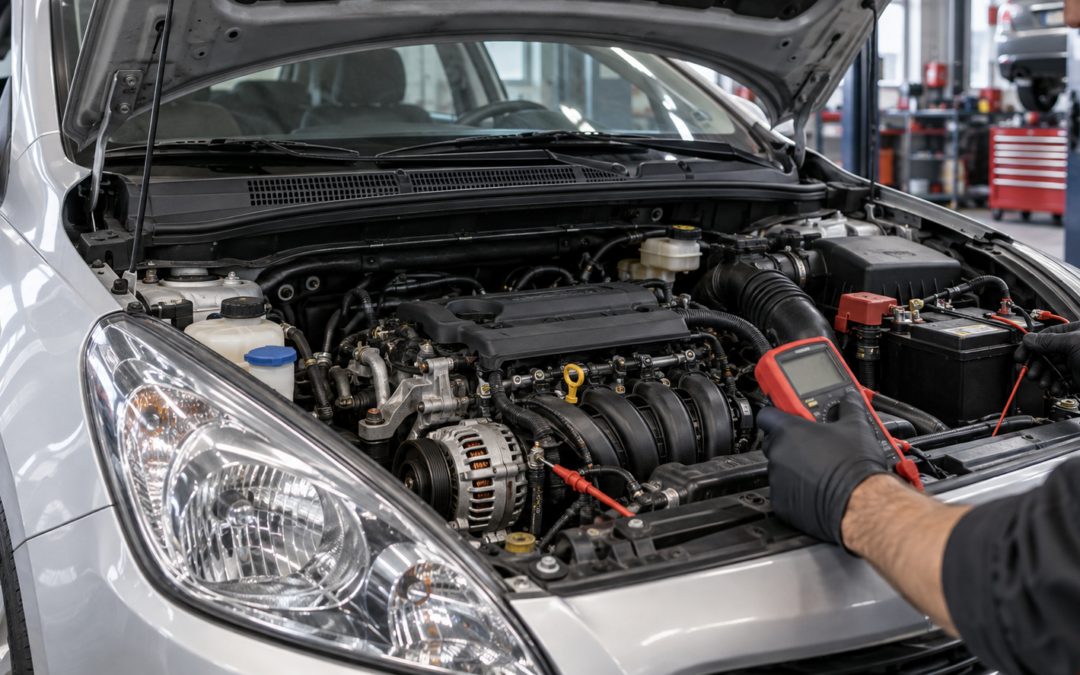
A battery warning light on a Hyundai i20 does not automatically mean that the battery is faulty. On the 2013 i20 facelift fitted with the G4LA 1.2-litre petrol engine, the alternator, auxiliary belt, battery, wiring and earth connections all form part of the charging system. Testing the system before buying a part prevents repeat failures and helps you select the correct replacement alternator.
Why charging faults need quick attention
Once the engine is running, the alternator supplies most of the vehicle’s electrical demand and recharges the battery. If it stops charging, the i20 will continue only while the battery has enough stored energy. Electric power steering, engine management, lighting, cooling fans and safety systems depend on stable voltage. Ignoring a charging warning can turn a manageable repair into a roadside breakdown.
Typical Hyundai i20 alternator symptoms
- The battery light remains illuminated or appears intermittently.
- Headlamps and dashboard lighting become dim or fluctuate.
- The blower motor slows when several electrical loads are switched on.
- The battery repeatedly goes flat despite being charged or replaced.
- Multiple warning lamps appear because system voltage is low.
- A squeal, whine or rough bearing noise comes from the belt side of the engine.
- There is a hot electrical smell near a damaged cable or alternator.
A sensible testing sequence
Inspect the battery first. Loose or corroded terminals can interrupt charging and starting. Check the battery case for swelling or leakage and confirm that it is securely held. Inspect the engine earth strap and the main charging cable. High resistance in either circuit reduces the voltage reaching the battery even when the alternator itself is working.
Examine the auxiliary belt for cracking, glazing, contamination and correct tension. The alternator cannot produce its rated output if the pulley slips. Listen to the tensioner and nearby pulleys, because a seized pulley can damage a new belt or alternator.
A technician can then test battery condition and charging voltage. The result should be assessed with the engine idling and again with electrical loads such as lights, demister and blower switched on. Voltage-drop tests across the positive cable and earth path reveal hidden resistance. A current-output test and diagnostic scan may be appropriate if the fault is intermittent.
Never disconnect the battery while the engine is running. The resulting voltage spike can damage control modules. If you do not have the correct equipment, an automotive electrician can perform the test quickly and safely.
Alternator or battery: how do you tell?
A weak battery may crank slowly after the vehicle has stood, while the alternator can still charge correctly once the engine starts. An alternator fault often allows the battery to discharge during driving. The two failures can also occur together: repeatedly deep-discharging a battery because of a bad alternator may permanently reduce battery capacity.
Testing both components is therefore more reliable than replacing whichever part seems most obvious. Also check for a parasitic electrical drain if the battery goes flat overnight even though charging performance is normal.
How to order the correct G4LA alternator
Use the vehicle VIN, model year and G4LA engine code, then compare the original alternator number. Check the plug shape, main terminal location, mounting ears, pulley width and groove count, and the output rating shown on the label. Facelift changes and different equipment levels can affect fitment.
Our donor-based listing records the unit against a 2013 Hyundai i20 facelift with the G4LA 1.2-litre petrol engine. See the used Hyundai i20 G4LA alternator and send us photographs of your original before ordering.
Used alternator inspection checklist
Check that the casing and mounting lugs are undamaged, the pulley turns smoothly and the shaft does not have obvious play. Inspect the plug and threaded output terminal for heat damage. Ask what test was performed and whether the pulley is included. A clean appearance is useful, but electrical condition and correct fitment matter more than cosmetic marks.
Fitting and post-repair checks
Disconnect the negative battery terminal and record belt routing before removal. Make sure the replacement alternator seats correctly and that its cables cannot rub against the belt. Inspect the belt and tensioner while access is open. Once fitted, reconnect the battery, start the engine and confirm stable charging with normal electrical loads.
If the battery has been deeply discharged, recharge and test it separately. Asking the new alternator to recover a severely flat or damaged battery places unnecessary load on the replacement.
Preventing another alternator failure
Correct any oil or coolant leak that can reach the alternator or belt. Make sure the battery is the correct type and is not internally damaged, because a battery that constantly demands excessive charge makes the alternator work harder. Inspect aftermarket accessories such as amplifiers, tracking devices or auxiliary lights for sound wiring and appropriate current protection.
After the repair, check that the charging warning light comes on during the normal ignition self-test and goes out after starting. Monitor starting speed and lighting behaviour over the next few days. If the warning returns, do not continue replacing alternators: repeat voltage-drop, battery and belt-system tests to identify the cause. Keeping the old part number and the final charging readings will help with any future enquiry.
During routine services, a quick visual check of the belt, terminals and earth straps can reveal deterioration before the vehicle stops charging. Early attention is usually cheaper than recovering a stranded vehicle and replacing a battery that was damaged by repeated deep discharge.
Frequently asked questions
Can an alternator fail intermittently?
Yes. Worn brushes, a regulator fault, heat-related electrical failure or a damaged connection may work sometimes and fail at others.
Does the battery light always come on?
No. Some faults reduce output only under load, and wiring problems can affect the warning circuit. Proper testing remains important.
Can a noisy alternator still charge?
It may charge while a bearing or pulley is deteriorating. Noise should be investigated before the belt system is damaged.
Need a Hyundai i20 alternator?
Cape Town Auto Spares supplies genuine used vehicle components from identified donors. Send your VIN and part photographs for fitment help and nationwide delivery.